Signed in as:
filler@godaddy.com
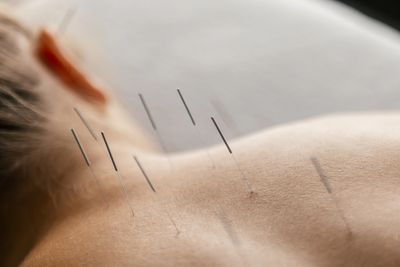
ACUPUNCTURE: THE BRIDGING OF TWO WORLDS
UNDERSTANDING THE FOUNDATION
For centuries, acupuncture was understood through the lens of Traditional Chinese Medicine (TCM). To the modern layperson, the classical terminology can sound like a foreign language. However, when we strip away the metaphors, we find a sophisticated system of medical intervention.
The Classical View: Qi and Meridians
In TCM, health is defined by the smooth flow of Qi (vital energy) through channels called Meridians.
Qi: Think of this as the "functional energy" of your body—your circulation, nerve impulses, and metabolic fire.
Meridians: These are the "highways" that connect your internal organs to the surface of your skin.
The Modern Translation
Today, we recognize that what the ancients called "Meridians" often correspond to fascial planes and nerve pathways. When an acupuncturist speaks of a "blockage," a Western doctor might describe it as "chronic inflammation," "muscle adhesion," or "neural dysregulation."
THE NEUROLOGICAL INTERFACE
How can a needle in the hand affect a headache? The answer lies in the Central Nervous System.
1. the Biochemical Cascade
When a needle is inserted into an Acupoint, it stimulates sensory nerves. These nerves send high-speed signals to the spinal cord and brain.
The Brain's Response: The hypothalamus and pituitary gland receive these signals and release endorphins and enkephalins. These are the body's natural "opioids," which are significantly more potent than many over-the-counter painkillers.
2. The "Gate Control" Theory
Your nerves can carry only so much information at once. Acupuncture stimulates "fast-traveling" nerve fibers, which "crowd out" the slower pain signals from an injury site, effectively "closing the gate" so the brain doesn't perceive the pain.
THE CASE OF THE INFLAMED KNEE
To see how these two perspectives work together, let’s look at a patient with chronic knee inflammation (such as osteoarthritis).
The Acupuncturist’s Perspective: "Bi Syndrome"
The practitioner examines the knee and identifies it as Damp-Heat Bi.
The Logic: "Dampness" (swelling/fluid) and "Heat" (redness/inflammation) have caused Qi stagnation.
The Goal: Use needles to "drain the damp" and "clear the heat" by stimulating points such as ST-35 (on the knee) and ST-36 (below the knee) to restore flow.
The Clinical Reality
The acupuncturist observes a localized circulatory failure. The tissue is hypoxic (low in oxygen) and trapped in a pro-inflammatory cycle. The needles act as the "reset switch."
THE SCIENTIFIC METHOD IN ACTION
If we were to track this knee treatment in a laboratory setting, we would see three distinct biological stages:
Step 1: Local Vasodilation
The needle creates a "micro-injury." The body responds by releasing histamines and nitric oxide, which dilate blood vessels. This flushes out the "Dampness" (stagnant metabolic waste) and brings in "Qi" (oxygenated blood).
Step 2: Cytokine Regulation
Inflammation is caused by proteins called cytokines (like TNF-α). Research shows that acupuncture at point ST-36triggers the vagus nerve, which tells the immune system to downregulate these pro-inflammatory proteins.
Step 3: Tissue Remodeling
Through the Fascial Network, the needle physically tugs on connective tissue. This mechanical stretch signals cells called fibroblasts to change shape and release adenosine, a natural chemical that further reduces pain and promotes tissue repair.
SAFETY, SENSATION, AND EXPECTATIONS
Acupuncture is an integrative therapy. It is not intended to replace emergency medicine but to work alongside Western treatments to enhance the body's self-healing capabilities.
Is it Safe?
Regulated: Licensed acupuncturists use single-use, sterile, surgical-grade needles.
Low Risk: Compared with the gastrointestinal risks of long-term ibuprofen use, acupuncture has a remarkably low risk of side effects profile.
What Does it Feel Like?
You may feel a slight pinch upon insertion, followed by a sensation called De Qi—a unique feeling of heaviness, tingling, or warmth. This is the physical sign that the nervous system has "caught" the signal.
The Cumulative Effect
Unlike a pill that wears off in four hours, acupuncture works by retraining the body. Most patients require a series of treatments to consolidate these neurological and anti-inflammatory changes into lasting health.